Socialization of Climate Change Solutions and Community-Based Green Economic Transformation With Churches in Java and Papua
- Tanggal : 27 Oktober 2025
- Jam : 22:22
I. Background
In the Abrahamic faiths, God created the earth as a sign of goodness. The creation of the earth is a religious narrative accepted within religious communities as an acknowledgment that the earth, all its contents, and humanity are creations of the One God. Only God created the earth and all its contents. This theological formulation is woven into the Christian faith, stating that the earth did not spontaneously emerge from chaos. God controls both chaos and order. When research into creation involves a scientific approach, the faith formulation of creation remains relevant. The choice of words in the creation narrative, which indicates the timing of God’s work, is not solely related to creation in the tenses of the first, second, third, fourth, fifth, sixth, and seventh days as a day of rest, because the entire creative process had already proceeded well. God prepared and brought about all other creation before the final creation of humans. After the first and second days, on the third day, God created plants that grew from the ground as a source of oxygen for humans (Genesis 1:11-13). Plants are also God’s messengers to absorb carbon emissions produced in the process of creation, sustaining the maintenance and balancing of the earth’s air which allows humans to live as part of God’s design.
Reading the creation of plants from the perspective of climate change mitigation demonstrates the alignment between God’s theology of creation and modern research that supports the importance of plants in absorbing greenhouse gas emissions. God’s theology of creation also demonstrates an understanding of the time tense of creation. The Hebrew word “yom” describes God’s time of creation, which involves God’s infinite time (see Genesis 2:4, Psalm 90:4, and 2 Peter 3:8). Thus, naming the days of creation as the first, second, third, fourth, fifth, and sixth days indicates the days when humans should remember God’s time of creation in worship as a sign of gratitude and the continuation of God’s creation and preservation of the universe.
At the same time, according to Christian theology, the awareness of the fall of man into sin as a fall that is not only personal, but also original sin has shown the character of humans who tend to destroy the order of God’s creation. The knowledge that humans have as a result of their desire to be the same as the Creator has caused humans to experience a curse. The impact of the curse is death. Humans experience suffering, with all their hard work, efforts to manage the earth can be destructive and lead to disaster for themselves. Salvation in Christ, whose spirit has been with God since creation, restores the glory of the earth and all its contents and humans. Christ’s salvation in God’s work in becoming human occurs simultaneously with the awareness of God’s knowledge that is increasingly acceptable to humans. The Bible writes that the history of God’s salvation in Christ began with the history of the creation of the earth as written in John 1: 10-11. Christ continues to renew the earth and humans carry out ecological repentance to return to live in the glory of the universe renewed by God himself. The Griya Jati Rasa Foundation in collaboration with Sarimulya Javanese Christian Church held an Ecological Repentance Service in commemoration of the Birth of Pancasila on June 1, 2025, at the church sanctuary.
Human exploration of the earth’s riches began after the industrial revolution. The success of geological research enabled the exploration of the earth for the extraction of its minerals. Various business groups, developers, and business organizations networked to exploit the openness of exploitation and exploit the earth’s resources. Various mineral and fossil raw materials have brought progress to human civilization, but also brought destruction. Since then, it has taken approximately 800 years for humans to seriously disrupt the structure of the earth’s contents, which God has cultivated since its creation.
Climate change is an extreme weather phenomenon that occurs on Earth due to temperature increases caused by greenhouse gas heating that accumulates beyond its threshold and cannot be channeled out into the atmosphere. The increase in Earth’s surface temperature has reached a threshold of 2 degrees Celsius since pre-industrial times. Global warming occurs on land and oceans. The triggers of climate change can be seen and measured in aspects of energy, transportation, industry, agriculture and deforestation. The phenomenon of climate change is visible in natural disasters such as landslides, extreme heat, drought, extreme rain, extreme winters, flash floods, tidal floods, storms, forest fires, rising sea water temperatures or sea water warming, sea level rise and land subsidence.
In successive meetings initiated by the United Nations, the world was made aware of the direct impacts of damage to the earth on various habitats. The commitment of the Paris Agreement on December 12, 2015, related to the reduction of carbon emissions. In 2030, Indonesia, as one of the 189 members who declared the UN resolution on 17 sustainable development goals (Sustainable Development Goals or SDGs), will evaluate its achievements. SDG goal 13 related to climate change will also be evaluated in 2030 regarding Indonesia’s commitment to reduce greenhouse gas emissions by 3.8%. A sign of success, Indonesia must be able to strive for forest and land absorption of greenhouse gas emissions greater than the carbon emissions produced. This commitment is known as the concept of FOLU NET SINK 2030. The abbreviation FOLU stands for Forest and Other Land Use. Indonesia has five nationally determined contributions (NDCs) committed to mitigating climate change: forestry (FOLU), energy, agriculture, industrial processes and product use, and waste and sewage. The Indonesian government and community must work together because, according to research and a Reuters report (2007), an estimated 2,000 Indonesian islands will be submerged by 2030 due to subsidence.
Governance for greenhouse gas emission reduction management is formulated globally, enabling the system to be implemented by all countries. The management formula must involve the government as regulator, the private sector in developing a net-zero emissions production system, and the public, who can participate in carbon emission reduction. The key point in global modeling for addressing global temperature reduction is the establishment of a carbon market. Activating a carbon market requires a series of stages that can be developed by involving all stakeholders, including the government, the private sector, and the wider public.
A low-carbon market is the trading of carbon resulting from efforts to stabilize greenhouse gas emissions, resulting in excess carbon reserves that can be exchanged with regions with high carbon emissions. The low-carbon market is regulated by state regulations through the Financial Services Authority (OJK). In implementing the low-carbon market in Indonesia, regulations only allow large industrial companies to participate in the carbon exchange. Communities with potential in managing greenhouse gas emissions through forest conservation, sustainable waste management, and carbon-absorbing environments are not yet eligible for participation in the carbon exchange. The Indonesia Stock Exchange is the operator of the carbon exchange in Indonesia.
A voluntary carbon market is a community-initiated trading activity to encourage their participation in climate change mitigation. The voluntary carbon market needs to be complemented by a voluntary carbon market protocol, which must be mutually agreed upon by all parties involved, including the government. This will prevent it from becoming a voluntary carbon market based on illicit trading principles.
On April 22, 2025, the Griya Jati Rasa Foundation organized a declaration on climate change mitigation and green economic transformation based on society in Yogyakarta. The declaration coincided with Earth Day. The venue for the declaration was the Institute of Quranic Sciences in Bantul. The declaration document was written by Dr. Ahmad Sihabul Millah, M.A., Rector of the An Nur Institute of Quranic Sciences. The declaration is formulated as follows:
In the name of ecological justice, sustainability, and shared responsibility for the earth, we declare:
- Reduce emissions and carbon footprints in every personal, institutional, and community activity.
- Protect forests, land, water, and biodiversity as a shared heritage of humanity based on local wisdom.
- Reject exploitative development models that damage the environment and marginalize vulnerable groups.
- Work together to increase public awareness and knowledge about climate change.
- Recognize and strengthen the role of indigenous peoples, farmers, and local communities in maintaining the balance of nature.
- Support and develop a green economy model based on the principles of sustainability, social inclusion, and gender sensitivity.
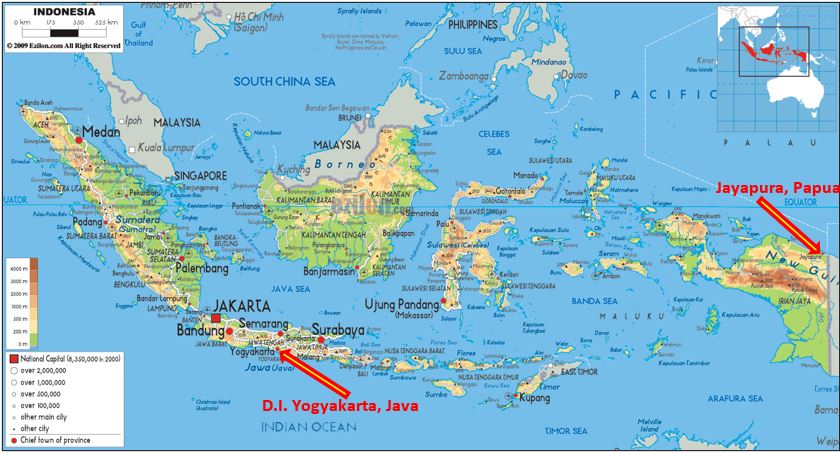
To maximize the movement, the Griya Jati Rasa Foundation is again conducting outreach on climate change mitigation and green transformation movements to churches, especially churches on the island of Java and churches in Papua. Some reasons related to the target of socialization, namely churches, are that Javanese churches in building theological and financial independence, have become pioneers of the indigenous Christian movement that occurred coincided with the declaration of maturity of tribal churches in Indonesia that separated from churches based on government institutions during the Dutch colonial era. During the colonial era, the island of Java became a model and source of agricultural production for trade to Europe and even globally. Agricultural production, forestry and fisheries made Java the base of economic growth in Indonesia both during the colonial period and today. Currently, the role of Java is still needed in efforts to reduce the global temperature even though the remaining forest cover in Java is only 19%, but the mechanism for strengthening community-based movements is getting stronger in the context of implementation in Java. Another important thing to explain is the context of churches in Papua as churches where the natural resource environment related to the available green pockets is 40% tropical forests that must be able to be managed independently by the community in Papua.
An interesting example of the community empowerment process undertaken by the Griya Jati Rasa Foundation in Giricahyo Village, Purwosari District, is the cliff tourism area with views of the Indonesian Ocean. Although it is the furthest from the center of the Gunung Kidul Regency government, it is a village that receives many tourist visits. Even the Raja Ampat government in Papua conducted a comparative study in Giricahyo Village. The majority of Giricahyo residents are Muslim, while the Raja Ampat community in Papua is Christian. The visit of government officials from Raja Ampat, Papua, to Giricahyo Village showed a common goal, namely that tourism is a prospect for both geographically, topographically, and culturally different locations in Indonesia.
The involvement of religious institutions in both Java and Papua, where communities are key pillars of tourism development, is unavoidable. To this end, the Griya Jati Rasa Foundation is called to conduct seminars, implement seminar findings, and provide action to churches affiliated with the Javanese Christian Church. These churches are located throughout the Special Region of Yogyakarta. Churches can collaborate with non-Christian communities to collectively mitigate climate change. Activities with churches in Papua are specifically conducted through the Evangelical Christian Church (GKI) in Papua.
II. Main Agenda
Based on the background outlined above, there are several important steps to be taken regarding outreach activities and community-based climate change mitigation and green economic transformation initiatives that can be undertaken in collaboration with churches in Java and Papua.
First, it is necessary to expand the climate change mitigation and community-based green economic transformation initiatives, as a collaboration between the Griya Jati Rasa Foundation, the Griya Jati Rasa Consumer Cooperative, and movement partners in the Special Region of Yogyakarta, to church leaders in Java and Papua.
Second, it is necessary to identify local ecological issues and formulate a theology for climate change mitigation and community-based green economic transformation with church leaders in Java and Papua.
Third, it is necessary to discuss mechanisms for empowering churches that can be implemented by encouraging congregation members and the surrounding community to take action on climate change mitigation and community-based green economic transformation.
Fourth, it is necessary to plant trees in the areas where churches are located in Java and Papua, adapting to land availability and local ecological needs.
III. Objectives
To formulate the activity agenda into strategic, structured, and measurable steps, the implementation of the socialization needs to be broken down into objectives. This way, efforts to involve churches in Java and Papua can be translated into concrete activities involving both congregation members and non-Christian communities living alongside Christians.
The objectives of the socialization are as follows:
- To broaden the vision, mission, and methods of the climate change mitigation movement and community-based green economic transformation, which has been initiated through the collaboration of the Griya Jati Rasa Foundation, the Griya Jati Rasa Consumer Cooperative, and movement partners in the Special Region of Yogyakarta.
- To formulate, together with church leaders, the theology of climate change mitigation and community-based green economic transformation, and ecological issues in Java and Papua.
- To empower congregation members and surrounding communities to carry out climate change mitigation and community-based green economic transformation by building collaborations with relevant government and private institutions.
- Carrying out a local tree planting movement that directly involves congregation members and the community around the church, both in Java and Papua.
IV. Outputs
The expected outputs of the outreach activities are to formulate ecological issues and action plans related to efforts to bring together various community-based quality practices in Java and Papua that can serve as models for churches in their joint involvement in climate change mitigation and green economic transformation within communities.
The action plan should include at least:
- Identification of strengths, potentials, and challenges arising from interactions between churches and communities in locations where ecological issues provide impetus for collective action to address environmental degradation.
- Identification of strengths and challenges external to the church’s location that are connected to ecological issues and joint policies implemented by both the government and the private sector to address these issues.
- Mapping the readiness and adaptability of the participants in this outreach seminar, which will encourage a learning process from ecological issues and collaborative efforts to address them, in which churches are called to directly engage.
- Preparing pilot community-based carbon market activities in which church congregations can participate through group self-reliance empowerment programs within the church. This program is expected to involve the non-Christian community in the surrounding area, both in the context of churches in Java and Papua.
V. Organizers, Participants, and Resource Persons
This outreach activity was initiated by the Griya Jati Rasa Foundation in collaboration with the First Presbyterian Church of Berkeley, USA, which provided a grant for this activity. The Griya Jati Rasa Foundation wrote the TOR (Terms and Conditions) for the activity and invited churches in Java (the Javanese Christian Church) and churches in Papua, namely the Evangelical Christian Church (GKI) in Papua, to participate in organizing the outreach activities and developing action plans for climate change mitigation solutions and community-based green economic transformation.
The outreach activities in Java and Papua will involve several resource persons, including:
- Representatives from the Yogyakarta Special Region Environment and Forestry Office and in Papua, who are expected to discuss regulations that allow non-business communities to participate in the carbon market.
- Farsijana Adeney-Risakotta, PhD, who will present the theological framework for climate change mitigation and community-based green economic transformation as the basis for the climate change mitigation movement in which churches in Java and Papua are involved.
- Perminas Pangeran M.Si, Dean of the Faculty of Business, Duta Wacana Christian University, who will explain about the form of green economic transformation that empowers society and the community.
- Ahmad Sihabul Millah, M.A. (author of “Green Islam”) from the An Nur Institute of Quranic Sciences will discuss the challenges facing religious organizations in Indonesia involved in natural resource management.
Speakers Dr. Perminas Pangeran and Dr. Ahmad Sihabul Millah will deliver a seminar on outreach in Java, and a seminar with churches in Papua will be held via Zoom.
- Representatives from the Department of Environment and Forestry (DLKH) in both Yogyakarta and Jayapura, Papua, will participate in providing training on empowering groups for self-reliance. This activity will take place on the same day as the seminar on climate change mitigation solutions and community-based green economic transformation.
VI. Schedule of Activities
November 2025:
- Outreach seminar for churches in Central Java and Yogyakarta, held in Yogyakarta.
- Outreach seminar for churches in Papua, held in Papua.
December 2025:
- Tree planting activities in the residential areas of church congregations in Gunung Kidul, Special Region of Yogyakarta.
- Tree planting activities in the residential areas of church congregations in Papua.
The activity schedule ensures implementation in November and December 2025. However, given the remote location of churches in Java and Papua, the program for outreaching solutions and actions to churches in Java and Papua can be combined into a seminar, seedling distribution, and empowerment program for selected groups. Therefore, the seminar and seedling distribution will take place during the morning-to-lunch session, while the briefing and handover of the empowerment program for selected groups will take place after lunch.
The implementation of activities by churches in Java will be at the end of November 2025. Meanwhile, activities in Papua are expected to be carried out simultaneously in early December 2025, as explained in the invitation letter sent to the Working Body of the Evangelical Christian Church (GKI) Synod in Papua.
VII. Closing
This Terms of Service (TOR) is hereby conveyed to the various parties involved to encourage the implementation of climate change mitigation activities and community-based green economic transformation that can be implemented in the areas where the churches are located.
Yogyakarta, October 27, 2025
Farsijana Adeney-Risakotta, Ph.D
Director
Kategori Berita
Berita Terkini