Griya Jati Rasa Foundation Work Program February 2026 – February 2027
- Tanggal : 20 Maret 2026
- Jam : 10:18
The 2026 program is based on the framework of reference for the Climate Change and Green Economic Transformation movement, as declared at the Earth Day celebration on April 22, 2025, at the An Nur Quranic Science Institute.
The annual activities of the Griya Jati Rasa Foundation are calculated from February 2026 to February 2027. Farsijana arrived in Indonesia after Bernie’s health trip on January 28, 2026. Immediately after that, the implementation of activities that had been discussed in the Griya Jati Rasa Foundation meeting in November 2025, held in Yogyakarta, was reduced to the activities described in this document.
There are 2 activity focuses. First, continuing the commitment to strengthening the Griya Jati Rasa Consumer Cooperative to become a National Cooperative, it will implement a green business transformation that promotes education and practice to change the behavior of cooperative members and their networking communities, and will involve them in the Climate Change Movement and the Community-Based Green Economic Transformation. Second, carrying out the Climate Change Movement strategically by determining the locus of important activities, consisting of:
Encourage villages, including their governments and communities, to participate in preparing to become net-zero emissions villages by This process began with a collaboration between the Griya Jati Rasa Foundation and the Giricahyo village at the sub-district government in Gunung Kidul. A Forest Farmer Group was established at the village level. Giricahyo Village is expected to become a learning village on independent carbon management for forest farmer groups across Indonesia, especially allowing indigenous Papuans to learn directly. Papua will become a carbon- resilient region to address global climate change. At the same time, Papua guarantees the existence of indigenous communities to protect their land from government programs, such as food security and mining exploration, which have been underway since the founding of the Freeport Company. The Griya Jati Rasa Foundation and its partners conducted activities to prepare villagers to develop Giricahyo into a Net-Zero Emission Ecotourism Village by 2030. Lecturers from the Faculty of Biotechnology at UKDW and Muslim leaders, activists, and a writer on Green Islam have conducted monthly training for the community. On January 16, 2026, the community welcomed postgraduate students and lecturers from the University of Maryland. The following activities remain to be continued:
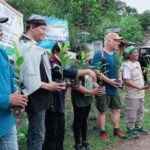
The Forest Farmer Group develops nyamplung (Tamanu) seedlings and various seedlings already planted, given by Griya Jati Rasa Foundation’s partnership with the Environmental and Forestry Department in Yogyakarta.
The villagers prepared for the visit of Maryland University in the coming year of January 2027, when they can offer their international guests carbon footprint packages to be bought.
The Forest Farmer Group develops Eco-Enzymes and their derivative products, such as pesticides, fertilizers, soaps, and environmentally friendly shampoos.
The Forest Farmer Group develops organic farming in collaboration with Griya Jati Rasa Foundation in its partnership with the Environment and Forestry Department in Yogyakarta.
This program is budgeted at Rp16.060.800 ($1.003,8) and funded by the Larry and Mary Ann Wight Fund.
Empowerment activities for lecturers from three faculties at Duta Wacana Christian University (the Faculty of Business, the Faculty of Biotechnology, and the Faculty of Informatics) specifically focused on empowering farmers and communities in Giricahyo Village to map trees for carbon emissions calculations in emission footprint activities, carbon management, tree identification by providing barcodes, tree health, and the processing of nyamplung eco-enzyme as a raw material for organic fertilizer that the village can reuse. These three collaborative empowerment activities will use funds totaling Rp35.000.000 ($2.187,5). The Grant of Larry and Mary Wright funds this program, which is Rp 33.139.200 ($2.071,20), and is provided by First Presbyterian Church in Farmington, New Mexico, Rp. 1.860.800 ($116,30).
Research activities focused on green Islamic economics, to encourage residents to use Eco- Enzyme products made by communities to protect the The Foundation collaborates with the An-Nur Institute of Quranic Sciences (IIQ), which involves the Faculty of Islamic Economics. For this research, the Griya Jati Rasa Foundation has allocated Rp 13.000.000 ($ 812.50). It is hoped that the Faculty of Islamic Economics can collaborate with Eco-Enzyme groups in Bantul. The Chair of Eco-Enzyme Nusantara Bantul is a partner of the Griya Jati Rasa Foundation, which was involved in the Declaration of the Climate Change Movement and Green Economic Transformation on April 22, 2025. The research objective is to understand the process of making Eco-Enzyme as a way to manage and care for nature and address pest problems, as practiced by Islamic boarding schools, as documented in the writings of Dr. Ahmad, Rector of the An-Nur Institute of Quranic Sciences. Research funds are expected to be used to empower Eco-Enzyme Nusantara Bantul to engage in marketing, with Rp1.000.000 allocated to prepare the group for training in packaging production to be ready to enter the marketplaces. A grant from First Presbyterian Church in Farmington, New Mexico, supported this research activity.
Eco-Enzyme training for cooperative members and their derivative products to enable them to enter the market was supported by a grant from Steve and Mary Fetter. Meanwhile, a green, economy-based business development program was provided, in which members’ products for making Eco-Enzyme derivatives can be purchased for use in rice The training focused on cooperative member groups in Samigaluh, Kulonprogo, and Berbah, Sleman. For institutional collaboration, the Griya Jati Rasa Foundation collaborated with the Environmental Agency, specifically for the Organic Crop Center. Funding for the training activities came from Steve and Mary Fetter.
A similar training program explained above is aimed at national youth from regions called Griya Jati Rasa Pioner Youth, facilitated by the Griya Jati Rasa Foundation. The training included Eco- Enzyme training and a communal iftar (breaking the fast). During the training, a Call for Innovation was announced for young men and women to develop business plans utilizing Eco-Enzyme for soap, shampoo, pesticides, and fertilizers that could be packaged and marketed. Special attention is given to youth who develop a marketing plan to promote eco-enzyme production using potential fruits and vegetables grown with organic matter from the original provincial The young men and women are expected to submit their proposals for implementing their marketing strategies. This program is budgeted at Rp8.000.000 ($500). First Presbyterian Church in Farmington, New Mexico, funds this activity.
The Ramadan Cheap Market is an initiative of the Griya Jati Rasa Foundation to expand and introduce the Griya Jati Rasa Consumer Cooperative to the community. Ramadan is a good opportunity to provide affordable staple food packages to the community in the Special Region of Yogyakarta. This activity involves cooperative members working with the local government to obtain permits and inviting residents to purchase cooperative products at a cheap market. These activities were carried out by the Griya Jati Rasa Foundation, which donated to the cheap market program. Thus, the cooperative offers products that generate a small profit. The Griya Jati Rasa Foundation subsidizes additional products. This program is budgeted at Rp3,000,000 ($187,5). This activity is supported by funding from the New Haven Presbyterian Church.
A joint teaching activity between Ahmad and Farsijana in the postgraduate program at the An- Nur Institute of Qur’anic Sciences (IIQ) and Dr. Ahmad and Farsijana in the postgraduate program in Social Entrepreneurship at the UKDW Faculty of Business. Funding requirements are Rp5.000.000 ($ 312.50).
Christian community strengthening activities at GKJ and GKI Papua were carried out with the support of the First Presbyterian Church of Berkeley Seminars and tree planting held on November 25 and 28, 2025. Religious service activities, such as Bible studies and program evaluations, will be held at the end of March (for the Javanese churches) and at the beginning of April 2026 (for the Papuan churches). A follow-up activity that remains to be undertaken is training on developing environmentally friendly businesses. The budget for Zoom activities is already available; however, funds for introducing carbon management and carbon calculations for farmers are not yet available. Funding requirements are Rp10.000.000 ($625)
A one-year reflection activity on the Climate Change Movement will be conducted with a strategic discussion on the Integrated Carbon Tourism Circular Economy Model. This will be held at the Bapperida’s office, and to celebrate the 11th anniversary of the Griya Jati Rasa This activity is supported by funding from the New Haven Presbyterian Church. Funding requirements amount to Rp 5.000.000 ($ 312.50).
Eco-Enzyme activities for GKJ Sarimulyo were conducted in November 2025 and harvested in February 2026. The results have encouraged the congregation’s commitment to Ecological Repentance during Ash Wednesday services. Farsijana has trained on the production of Eco- Enzyme products for shampoo and detergent. Steve and Mary Fetter funded this activity.
Climate change disaster response activities. Members of the Griya Jati Rasa Consumer Cooperative in Aceh received financial assistance following the flash floods. The initial funding from members of the Griya Jati Rasa Consumer Cooperative and the Griya Jati Rasa Foundation amounted to Rp2.000.000 ($125). The second grant from the Griya Jati Rasa Foundation for disaster relief is Rp 1.000.000 ($ 62.50). This fund was raised through a $5 USD visit from Maryland guests to Giricahyo Village. They paid $40 USD to Giricahyo to organize the program and $5 USD to the Foundation’s climate- disaster management program. A follow-up program still to be implemented is education and tree planting for groups in Aceh and North Sumatra. It is hoped that this program can be implemented with a grant of Rp96.000.000 ($6,000).
A collaborative experience writing activity with the Griya Jati Rasa Foundation, undertaking the Climate Change Movement and Green Economic Transformation. This activity aims to invite reflection on the journey of the community-based climate change movement and green economic transformation. Initial funding of 400.000 ($87,5) has been secured from the Papua Program and GKJ. This activity still requires approximately Rp20.000.000 ($1.250) to print a book. The title is “Resilien Rahim Bumi (Resilien of Earth Womb).”
Staff salaries for 2025 paid by Farsijana in the amount of 956.007 ($3.685), and with funds from donors amounting to Rp64.810.660 ($4.050).
Staff salary needs for July-December 2026 are covered by church donors, with the amount still needed being Rp98.428.413 ($6.152).
Farsijana’s paper presentation in Kalimantan and at the IKN to offer a product collaboration program requires funds of Rp 10,000,000 ($625)
The development of accommodation in the Tea Plantation to reduce carbon footprint emissions. The funding requirement for building one house is Rp.32.000.000 or $2.000 USD. It is hoped that two houses can be built. Therefore, the funding requirement is Rp64.000.000 or $4.000. This house is a source of income for the Foundation, which shares the proceeds with members of the Griya Jati Rasa Consumer Cooperative. The Griya Jati Rasa Foundation currently receives a donation of $ 1,000 (Rp 16,000,000) from Larry and Ann Jennings. The funding requirement is Rp 64.000.000 ($4.000)–Rp 16.000.000 ($1.000), resulting in Rp 48.000.000 ($ 3.000).
Summary:
After describing the activities of the Griya Jati Rasa Foundation above (numbers 1 – 15), it is also necessary to explain that the donation income from July 2025 to March 2026 was Rp358.939.220 ($22.433). The money the churches gave for Farsijana to preach and support for Farsijana’s lodging in Princeton during her interpretation assignment or the summer 2025 churches’ visit, was also included as income from the church to send
directly to the Griya Jati Rasa’s account to support its 2025 program. Expenditures paid from the donation from July 2025 to March 2026 amount to Rp 183.241.345 ($11.453). Remaining funds are Rp175.697.875 ($10.981). The funding requirement is Rp463.126.288 ($28.945). The remaining funds needed are Rp463.126.288 ($28.945) minus Rp. 175.697.875 ($10.981), totaling Rp287.428.413. ($17.964). The donation spending report, written in Indonesian, can be viewed using the provided barcode. After deductions, the activity planning is not bolded. What remains is Rp79.437.075 ($4.965), which is the fund centralized for staff salary payments until July 2026. There is still a remaining staff salary payment from July to December 2026, which is approximately Rp98.428.413 ($6.152)
As you read the plan report above, please note that the bolded budget amount indicates it is not yet available to support the programs as planned.
It should be clarified that churches or individuals who donate more than $1,000 will use the first $1,000 to pay staff salaries, and the remaining donations will be used as part of the program funds. Therefore, the name of the church or individual is explicitly mentioned in the program activities described in this report.
Meanwhile, churches and individuals who donate $1,000 or less have their contributions pooled immediately into a fund for Griya Jati Rasa’s five staff salaries. A special donation from Judy Crawford was combined with the donation from Steve and Mary Fetter.
Donations from Steve and Marie Fetter are received every month in the amount of about Rp 1.600.000 ($100). From May 2025 to March 2026, Rp17.868.000 ($1,100) was already received and used to pay for various programs, totaling Rp17.217.200. The grant’s spending report can also be seen at the barcode beside it.
The grant from First Presbyterian Church of Berkeley was a one-time grant and will not be provided to the Griya Jati Rasa Foundation in the future. The spending reports for Javanese and Papuan church activities are listed using the barcode scanner to the side.
The Griya Jati Rasa Foundation will award a grant for a three-year program from Larry and Mary Ann Wight. In this year’s activities, the program for Giricahyo village has focused on using the grant from Larry and Mary Ann Wight. A grant from First Presbyterian Church of Farmington, New Mexico, also covers the 2026 Giricahyo’s village program deficit.
The donation from the First Presbyterian Church of Savannah, managed separately by the Co-op of Griya Jati Rasa, of Rp 16.000.000 ($1,000) will specifically be used to upgrade the Semar Jati Rasa Mobile application by adding sales and payment features for “asuh pohon” (tree adoption) from farmers throughout Indonesia who are members of the Griya Jati Rasa consumer cooperative. Members of the Co-op currently use the Semar Jati Rasa Mobile Application for various sales, payment, and purchase transactions connected to banking in Indonesia.
This planned activity is directly related to community empowerment across three faculties (Business, Biotechnology, and Informatics) of Duta Wacana Christian University, and will be inaugurated by providing activity funding packages through a strategic discussion on an integrated carbon tourism- based circular economy model at the Bapperida Office on March 30, 2026. Bapperida is an abbreviation of the Regional Development Planning, Research, and Innovation Province. The pilot project is in Giricahyo village, Kapenewon Purwosari, Gunung Kidul Regency (see numbers 1 and 2).
The Griya Jati Rasa Foundation committee wrote a letter of thanks to acknowledge donations that have been received in the Griya Jati Rasa account in Yogyakarta, and sent it directly to the churches and individual donors. Then the list of donors is published on Griya Jati Rasa’s website. Please find the information on the left side of the barcode.
In fact, with the funds currently available in the Griya Jati Rasa Foundation account, all planned activities can only be carried out when funds are available. However, some programs in 2006 had funding requirements written in bold and are still considered planning programs due to the unavailability of funds.
It is expected that, in the 2026 budget year, if funds are insufficient, priority will be given to activities already included in the budget, with no bold. So that activities that cannot be carried out can be re- proposed as part of the Griya Jati Rasa Foundation’s work program in 2027. Notification regarding adjustments to the 2027 program and activity plan will be submitted to donors in May 2026. The Griya Jati Rasa Foundation welcomes proposals from churches and individuals who are donors, regarding the transparency of reports on the receipt, use, and distribution of donations to the Griya Jati Rasa Foundation’s programs, as conveyed in this report.
If you, as the body of Christ (churches or individuals), would like to be involved in making a donation, please state which of the programs described above in this report could be funded by your donation.
The activities of the climate change movement program and community-based green economic transformation carried out for the community and religious communities in Indonesia can only occur if this program is also part of the struggle of Christians and churches in the United States, especially Presbyterian Churches around the United States of America.
Hopefully, in the future, we can create an Indonesian network that supports Christ’s ministry in Indonesia and brings together all donors, churches, and individuals. The Griya Jati Rasa Foundation would like to thank you for all of your involvement as co-workers of Christ in restoring creation on this earth. Happy Easter, and may it be the day of Christ’s resurrection, restoring creation and making the church an ecological Easter. Amen. (Farsijana)
Kategori Berita
- Encourage villages, including their governments and communities, to participate in preparing to become net-zero emissions villages by 2030. This process began with a collaboration between the Griya Jati Rasa Foundation and the Giricahyo village at the sub-district government in Gunung Kidul. A Forest Farmer Group was established at the village level. Giricahyo Village is expected to become a learning village on independent carbon management for forest farmer groups across Indonesia, especially allowing indigenous Papuans to learn directly. Papua will become a carbonresilient region to address global climate change. At the same time, Papua guarantees the existence of indigenous communities to protect their land from government programs, such as food security and mining exploration, which have been underway since the founding of the Freeport Company. The Griya Jati Rasa Foundation and its partners conducted activities to prepare villagers to develop Giricahyo into a Net-Zero Emission Ecotourism Village by 2030. Lecturers from the Faculty of Biotechnology at UKDW and Muslim leaders, activists, and a writer on Green Islam have conducted monthly training for the community. On January 16, 2026, the community welcomed postgraduate students and lecturers from the University of Maryland. The following activities remain to be continued:
Berita Terkini